
Peak Oil is You

Donate Bitcoins ;-) or Paypal :-)


Peak Oil News and Message Boards

Trump Admits Diesel U.S. Export Ban Could Raise Gasoline Prices
A potential ban on U.S. diesel exports could have "a negative impact on gasoline," U.S. President Donald Trump said late on Wednesday, although he didn't rule out such a move from the Administration. The President told reporters in the Oval Office that he and the Administration continue to discuss the pros and cons of a diesel export ban every day, "but it just seems that it would have a negative impact on gasoline." Earlier this week, Goldman Sachs analysts also warned that a U.S. diesel export ban would push domestic gasoline prices higher as refiners could be forced to reduce processing rates. President Trump on Wednesday appeared to be less inclined to ban diesel exports than a few days ago, but he has not yet ruled out the idea that emerged last month as retail diesel prices in the United States hit $6 ...
Iran’s Disappearing Oil Is Becoming Everyone’s Problem
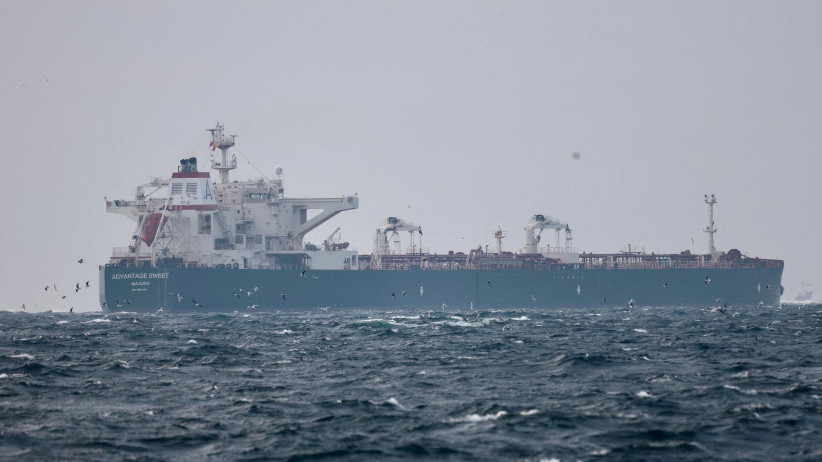
Iranian oil is disappearing from the market just as its biggest buyer returns for more. China's recovering crude demand is colliding with the loss of a supplier that sustained its independent refiners through the crisis, forcing them to compete for increasingly expensive alternatives. The consequences reach beyond China: every replacement barrel tightens supplies for other buyers, while Tehran faces a growing incentive to disrupt the Strait of Hormuz, which is now carrying an unexpectedly strong 13 million barrels a day (just 5 million below pre-crisis level), while its own oil remains trapped. Iranian crude has long been an underestimated part of the global oil balance. After Bashar al-Assad's government fell in December 2024, breaking the political relationship that sustained Iranian shipments to Syria, China became Iran's only crude buyer - in 2025, it received an average of 1.4 million b/d. The ...
Iran’s Hormuz oil leverage crumbles as US blockade bites
Iran's grip on the Strait of Hormuz is slipping, The Wall Street Journal reported, as the US Navy and Gulf producers get better at dodging Iranian attacks. That shift is eroding Tehran's leverage in talks with Washington and raising fears of a fresh military escalation. Regional crude exports have rebounded to nearly their highest level since February's war, with Hormuz and bypass routes moving almost 80% of prewar volumes, tracker Kpler found. Output from Saudi Arabia, Iraq, the UAE and others has climbed to nearly 13 million barrels a day, per ship tracker Huax, while Riyadh has also resumed flows through its repaired East-West pipeline into the Red Sea. Iran, unable to move oil through Hormuz since July's US blockade, could see its stockpiled reserves run out by mid-October, according to Kpler. That threatens a key revenue source as sanctions and war ...
High gas prices are spurring states to waive taxes and regulations amid midterm election
COLUMBUS, Ohio (AP) — State officials nationwide are focusing on rising gas and diesel prices tied to the war in Iran, offering gas tax holidays and other measures to ease costs as affordability remains a top voter concern in the critical midterm elections. The high gas prices took center stage in Ohio on Wednesday, as lawmakers passed a 90-day state gas tax holiday with broad bipartisan support. Including Ohio, about one-third of U.S. states have implemented some form of fuel tax relief, with many taking action within the past week, according to an Associated Press review. Some states have suspended their fuel taxes. Others have temporarily reduced taxes. And still more have targeted relief only to farmers, loggers and others who use a special type of diesel fuel. The average price of regular gasoline stood at $4.43 a gallon on Wednesday, up roughly ...

Crude oil exports through the Strait of Hormuz hit prewar levels, but fuel shipments remain constrained
Crude oil exports from the Strait of Hormuz have basically returned to levels normal before the Iran war, as U.S. military escorts have boosted shipments and pipelines have redirected flows. Crude transiting Hormuz reached a seven-day average of 13.5 million barrels per day as of Monday, which matches a prewar baseline for shipments through the strait, according to data published Wednesday by Kpler, a firm that tracks tankers and global trade flows. Iran has claimed throughout the war that it controls Hormuz and has declared the closure of the strait multiple times. But Tehran is losing its influence as strong volumes pass through Hormuz, said Matt Smith, director of commodity research at Kpler. Crude oil shipments from the Middle East region, including the Persian Gulf and Red Sea, are sometimes higher than prewar levels. The region reached a seven-day average of 19.5 million ...
Explainer: What is Alaska LNG and why does the project face doubts?
SINGAPORE, Sept 30 (Reuters) - President Donald Trump could unveil plans as soon as Wednesday to tap South Korea's pledged strategic investment package for about $54 billion to build a liquefied natural gas project in Alaska, as he rolls out a series of economic initiatives ahead of November's midterm elections. WHAT IS THE ALASKA LNG PROJECT? The Alaska LNG project is a proposed $44.5 billion to $54.5 billion development to transport natural gas from Alaska's North Slope in the state's far north through a pipeline to domestic consumers and, ultimately, an export terminal for overseas buyers. The project is 75%-owned by Glenfarne Group, with the state of Alaska holding the remaining 25% stake. The project involves constructing a pipeline stretching over 800 miles, or nearly 1,300 km, from the North Slope to an LNG liquefaction facility in Alaska's southern port of ...

China’s embrace of electric trucks shifts oil market
As Qu Shaolong pulls his electric truck into one of the many charging stations that dot the Chinese coal hub of Yulin, the latest phase in the country's energy transition is playing out in real time. The roads in this part of Shaanxi province are filled with big rigs ferrying coal from mines to railheads. More and more of them are, like Qu's, battery-operated, allowing truck owners to avoid diesel prices that have climbed steadily this year. The shift is changing China's energy landscape. "I don't think anyone will switch back to diesel trucks," said Qu, 39, who has spent the last three years behind the wheel of an electrified hauler. "Nobody wants to return to a last-generation technology." Qu is one of thousands of drivers powering a profound shift in the world's biggest oil import market. Chinese e-truck sales jumped almost 80% ...

The World’s Diesel Problem Runs Deeper Than the Iran War
The nature of the shortage of diesel and jet fuel is more complex than most people realize. Based on my analysis, a shortfall has existed since at least 2020. The shortage is not simply the result of the closure of the Strait of Hormuz. In this post, I will provide background information regarding the nature of the shortfall and the international conflict it is leading to. I will also share my thoughts on how, over the long term, the situation might be mitigated. I doubt whether a solution will be available in the short term, but I can at least give readers an idea of one direction in which a possible workaround might be available. My idea is that the economy needs to transform itself in a way that uses diesel and jet fuel (grouped together on some reports as "middle distillates") ...
Trump will unveil $54 billion in South Korean investment in Alaska, site of a tight Senate race
President Donald Trump is expected to announce on Wednesday plans for South Korea to invest roughly $54 billion in a project to export natural gas from Alaska, a proposal long backed by Republican Sen. Dan Sullivan, who's in a competitive reelection contest there. The investment would mark the second time this week that the Republican president has sought to highlight the promise of foreign investment made possible by his administration's trade policy in states where Republican Senate candidates are in tight election campaigns. He made a similar announcement on Monday in the Oval Office for a massive steel plant in Iowa. The Alaska investment comes from pledges made as part of a 2025 trade deal with South Korea, which included promises of $350 billion in U.S. investments in exchange for lower U.S. tariffs on South Korean cars, auto parts and other products. The ...
US presses Europe to release more emergency oil reserves as prices surge
The United States has urged European countries to release more emergency oil reserves to curb soaring energy prices, as Washington announced it would put another 40 million barrels onto the market. "While the United States and Japan are delivering on their commitments, several European member countries have released only a fraction of the crude oil and petroleum products they pledged," US Energy Secretary Chris Wright said on September 29. "We urge every member country to fulfil its commitments." The appeal comes as the Trump administration considers a 90-day diesel export ban in an effort to contain domestic fuel prices ahead of November's midterm elections. Washington says its latest release from strategic reserves is part of a coordinated effort to stabilise oil markets as disruption in the Middle East sends prices sharply higher. US diesel has surged to $7 a gallon while Brent crude oil ...
Germany Orders SEFE to Add 8 TWh of Gas to StorageSecuring Energy for Europe (SEFE), the German state-owned gas importer, has been instructed to ...
 Can the diesel and jet fuel shortage be solved?
The nature of the shortage of diesel and jet fuel is more complex than ...
 Gulf oil exports recover to 23.3 million bpd, matching 2025 average as crude drives 90 percent of rebound
Gulf oil exports have rebounded to 23.3 million barrels per day over the past ...
Russia Extends Diesel Export Ban through OctoberRussia extended a ban on most diesel exports through October, further tightening the global ...


Oil News Categories
Recent Board Topics
Archive
Member Comments
- on Gas topped $12 a gallon in parts of Europe—and consumers are spending an extra $231 million a day
- on Mexican president announces bailout for cash-strapped Pemex
- on Sir Jim Ratcliffe suspends production at key UK plants blaming high gas prices
- on Will shutdowns forced by US blockade damage Iran’s oil wells?
- on India, Oil, And Electric Vehicles
- on Will shutdowns forced by US blockade damage Iran’s oil wells?
- on Dr. Mike Joy on Peak Oil
- on Export Constraints Curb Kazakhstan’s Ability to Offset the Global Oil Shortage
- on StanChart Warns Oil Is Now Built for Sharper, More Frequent Spikes
- on US oil floated on cheap money
- on US oil floated on cheap money
- on U.S.-Venezuela Oil Deal Threatens China’s Oil-Backed Loans
- on What to know about the Southcentral Alaska gas crunch
- on US Strategic Petroleum Reserve falls to lowest level since 1982
- on More than 20% of global refining capacity at risk of closure
- on Trump and Venezuelan Oil: 65 Billion Barrels on Paper. Almost None in the Tank.
- on Russia’s fuel crisis returns as Ukrainian drones target oil facilities
- on The Story of Oil 1822–1922
- on Venezuela’s Oil Exports Fall Even as U.S. Shipments Hit Seven-Year High
- on Venezuela’s Oil Exports Fall Even as U.S. Shipments Hit Seven-Year High
PO Real Time
No tweets available